SEEC Symposium
2026
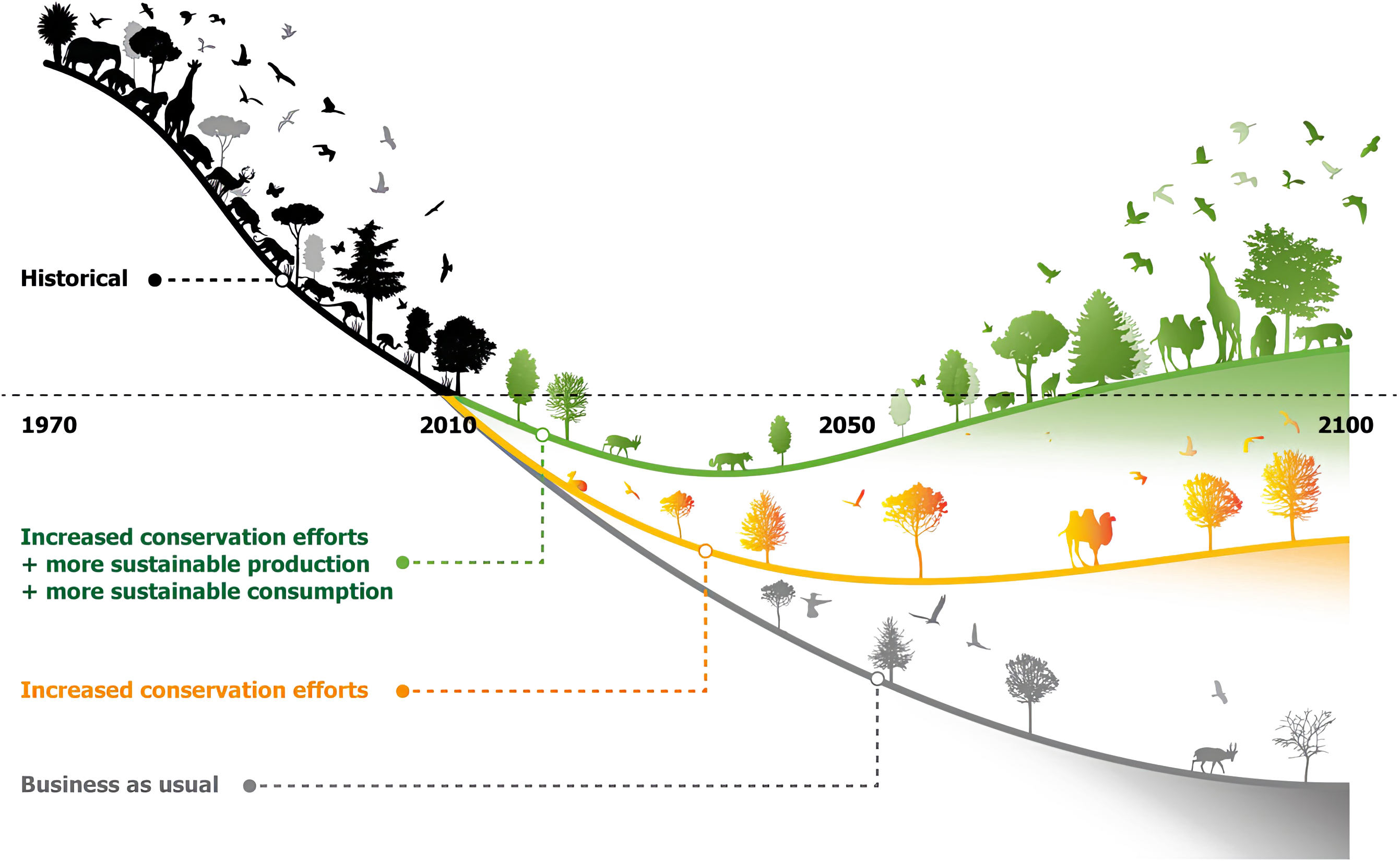
Forecasting Biodiversity Trajectories?
Current State
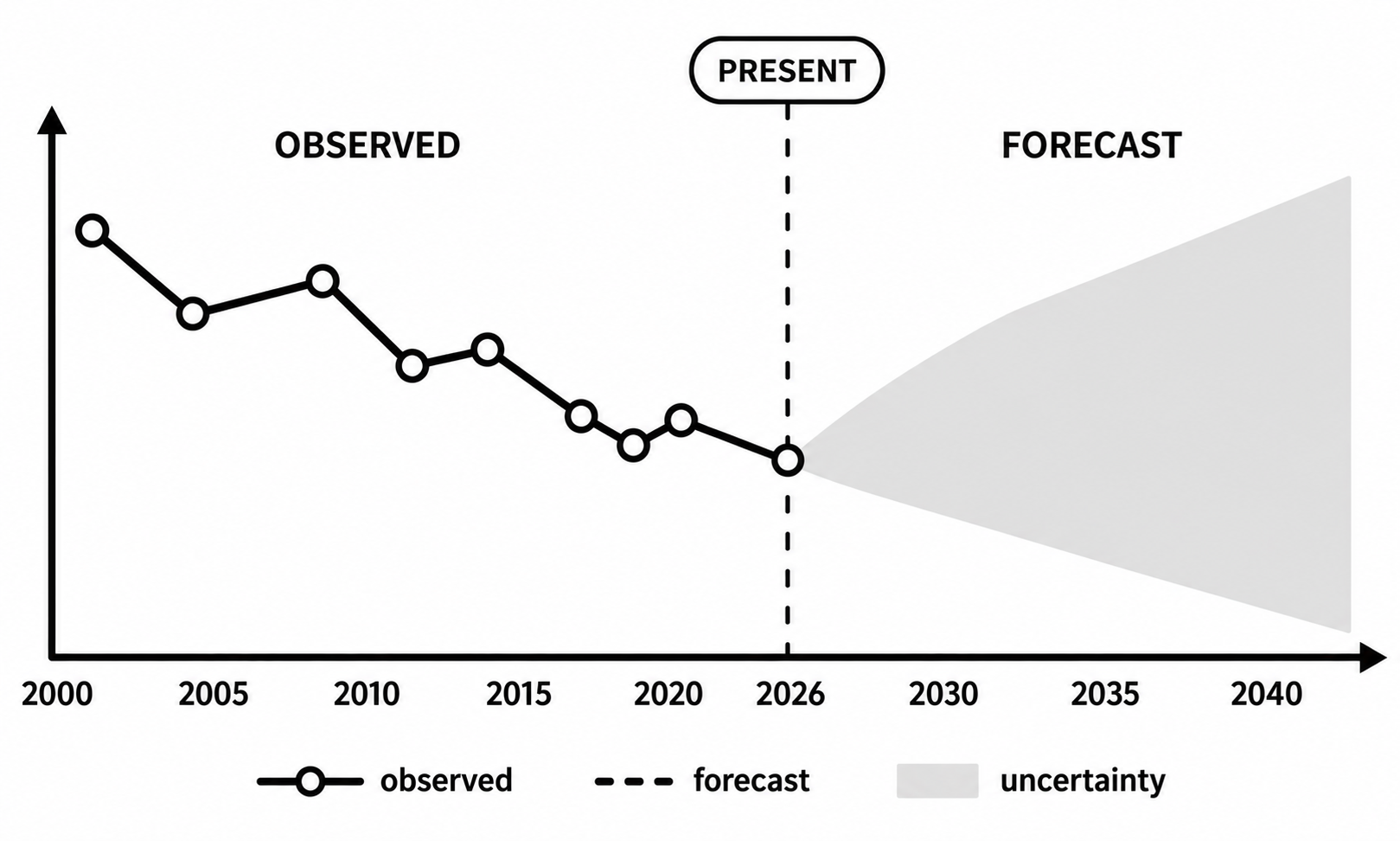 Predicting biodiversity dynamics is hampered by fragmented, inconsistent or context-dependent theory.
Desired State
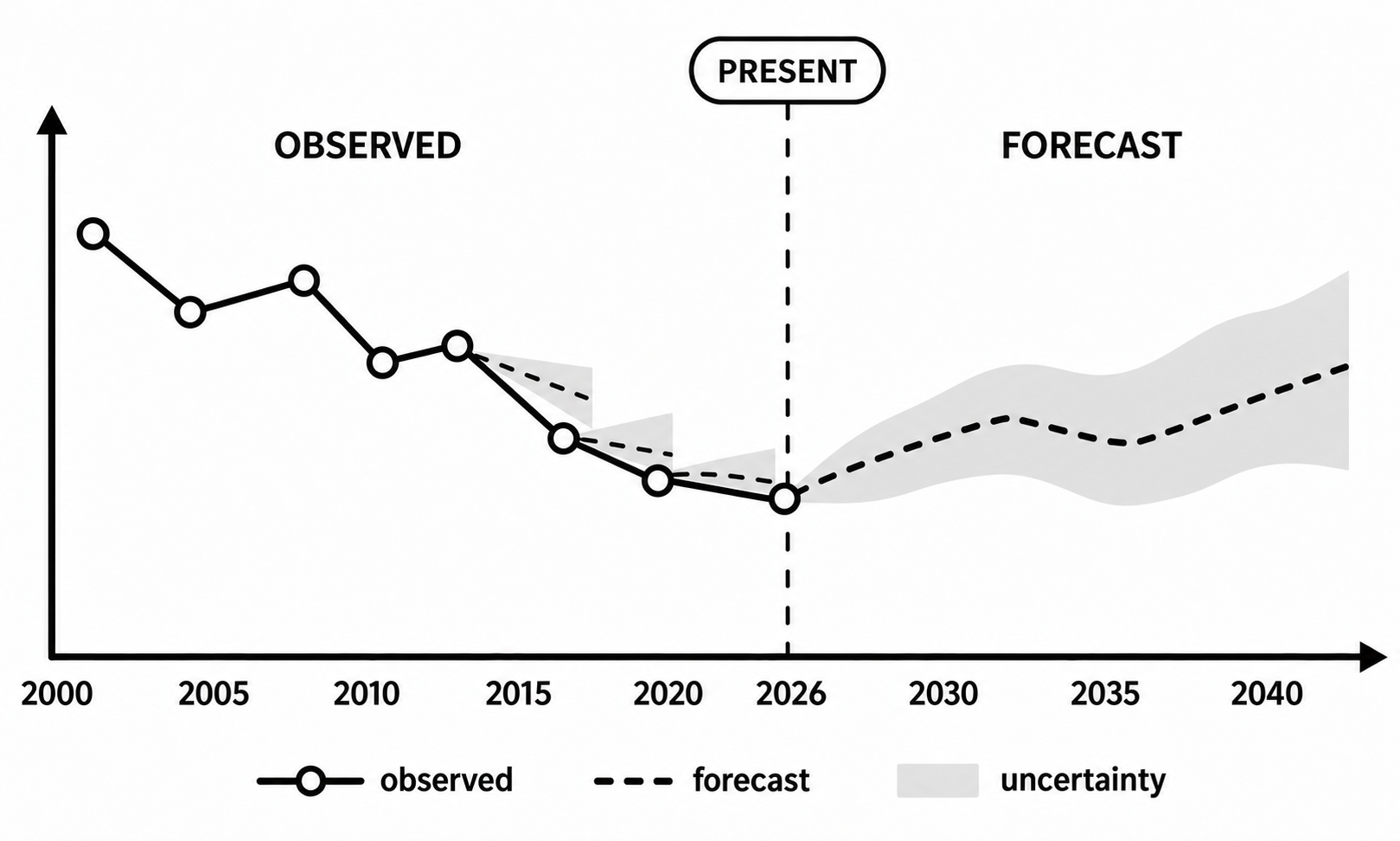 Coherent integrative theory allows prediction of biodiversity dynamics and iterative learning from new observations.
The Challenges
Complexity of Biodiversity
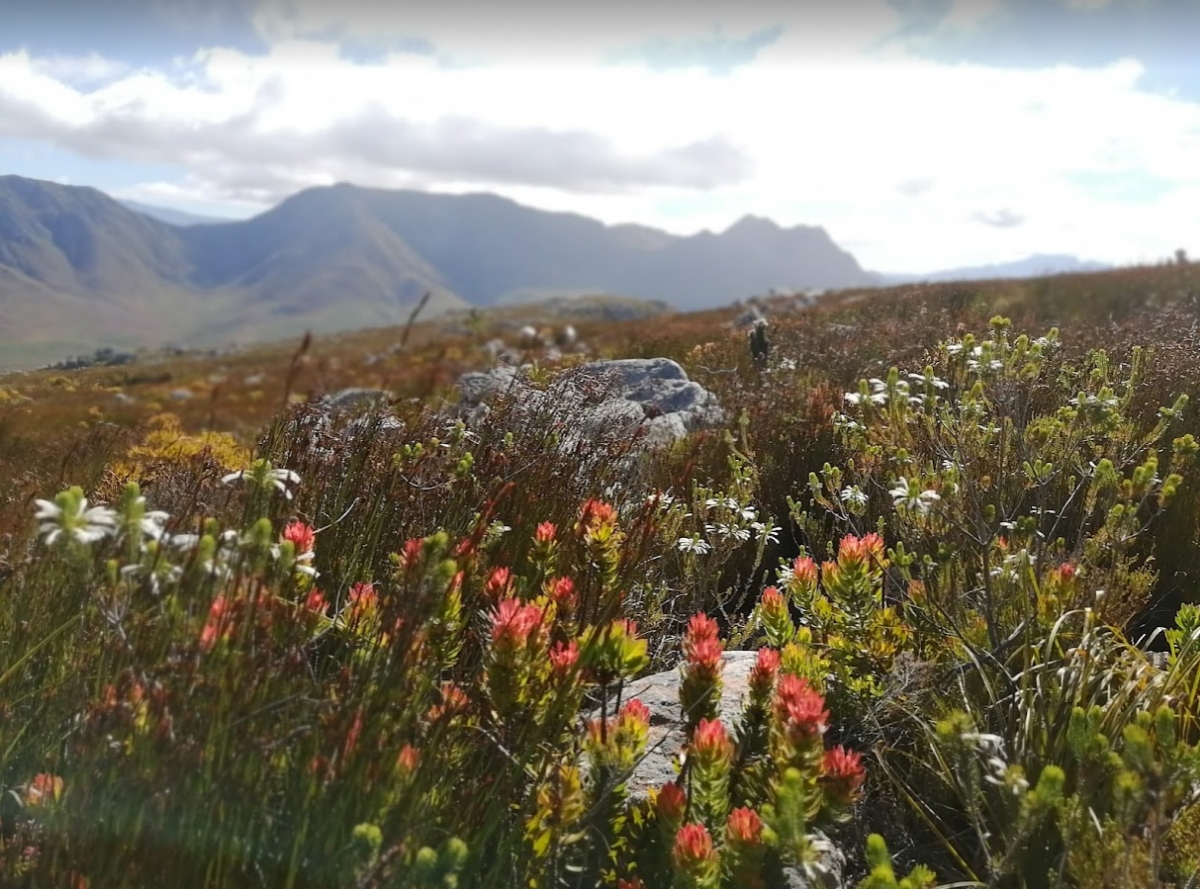
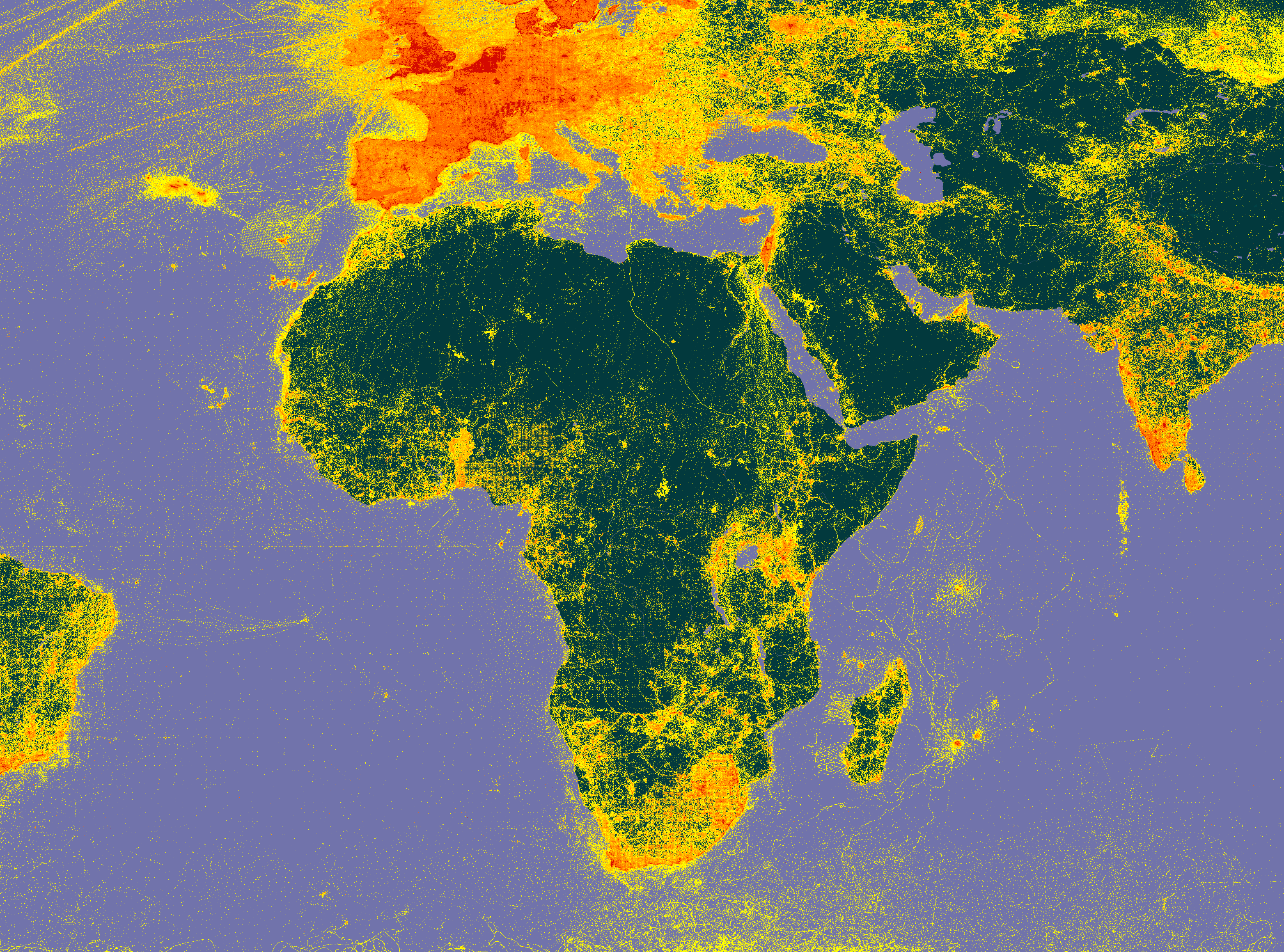
Incomplete Observation
Limited Causal Inference
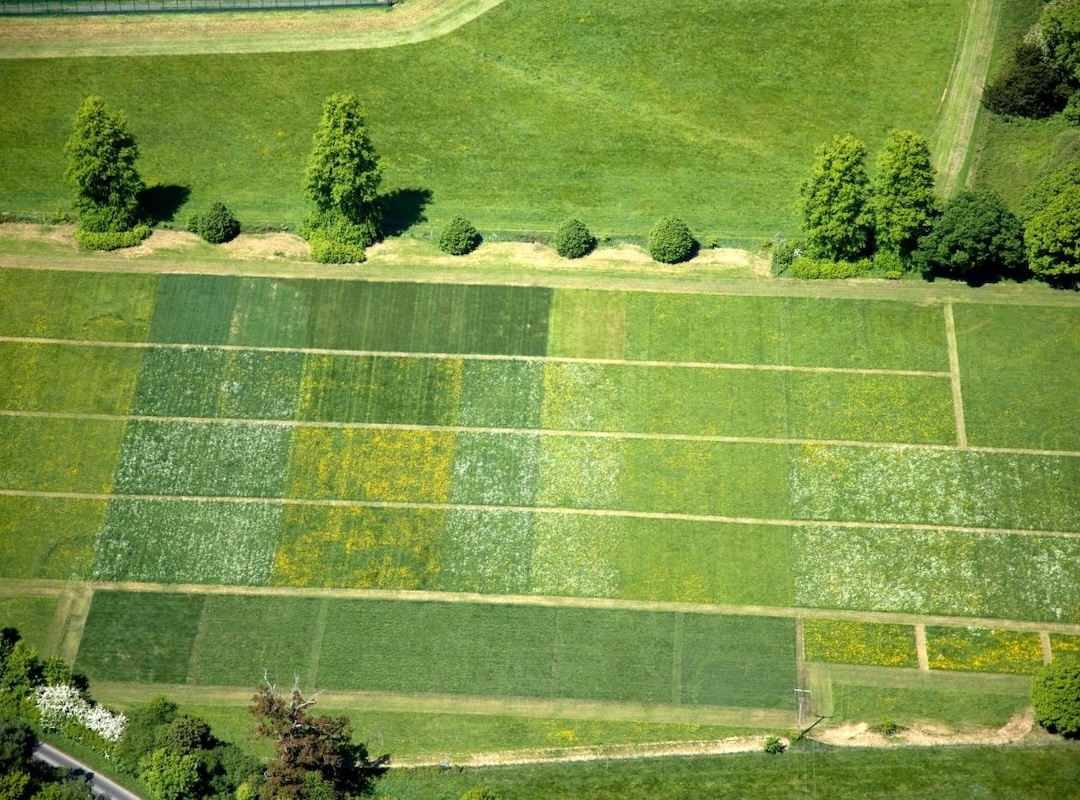
We haven’t had the tools needed to test and integrate theory across the scales required for prediction of biodiversity!
Solutions?
Incomplete Observation
Sensors and Citizen Science
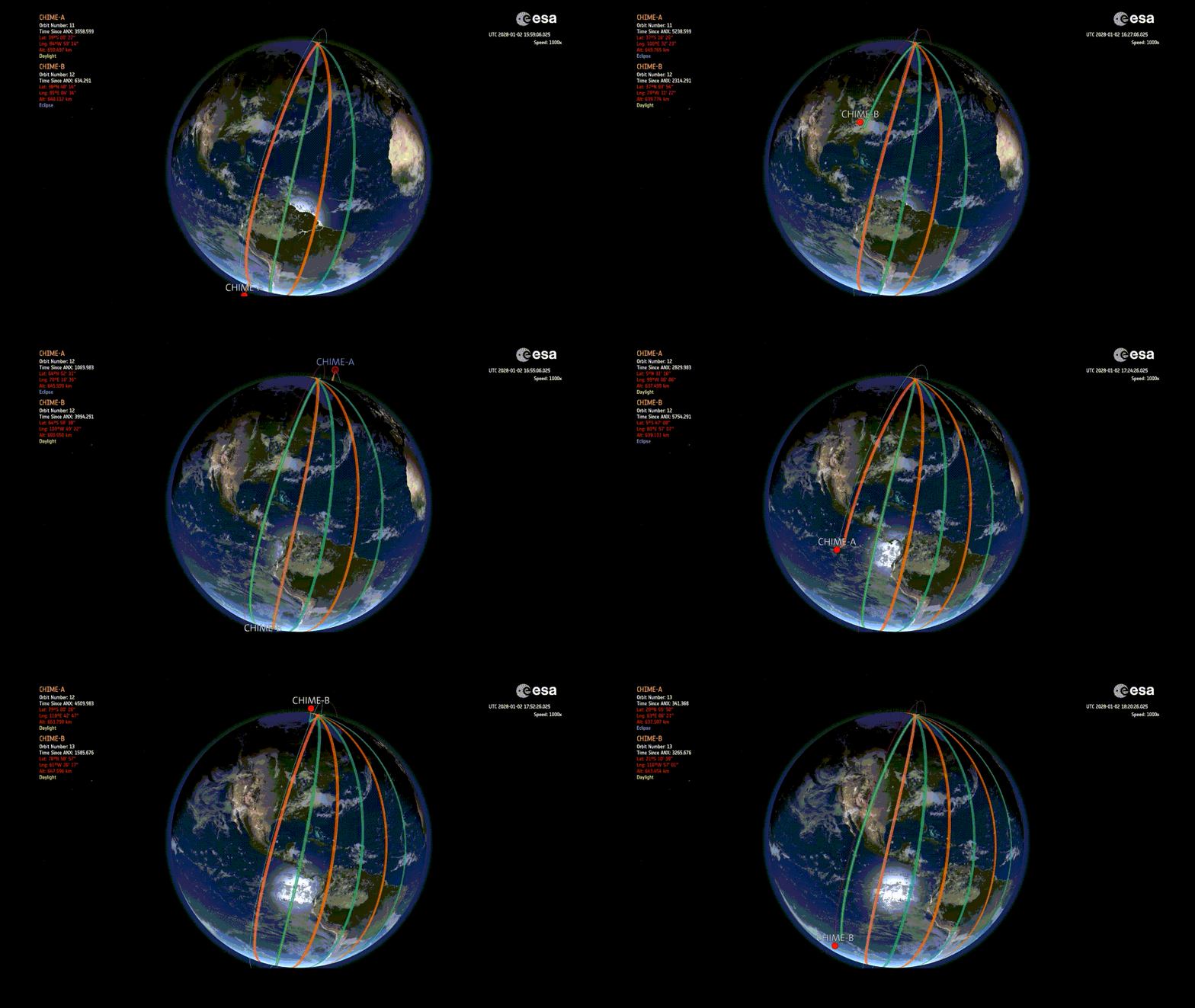
Satellites provide observations from metres to the globe, while ground-based sensors and citizen scientists provide rich in situ data
Solutions?
Limited Causal Inference
Modern Causal Statistics
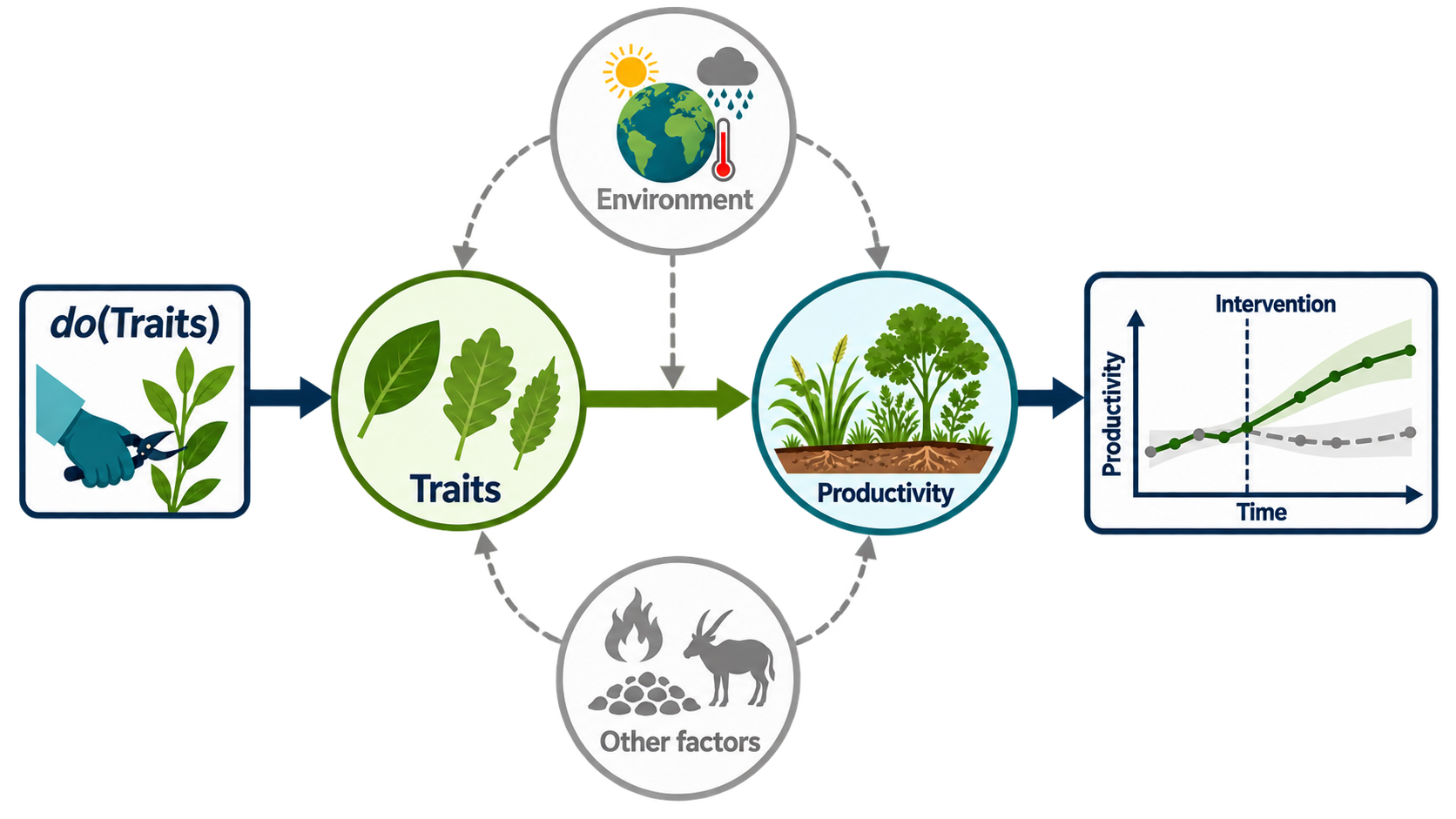
Allows us to test causation at the scale of observations
Solutions?
Complexity of Biodiversity
Trait-Based Ecology

Mechanistic links between scales from organism to ecosystem and Nature’s Contributions to People
For those who need to simplify…
Solutions!
Tractable Measurements
Dense observations
Causal Statistics
Combining these solutions makes biodiversity theory testable and continuously falsifiable across spatial and temporal scales.
Ultimately allowing better prediction to inform decisions…
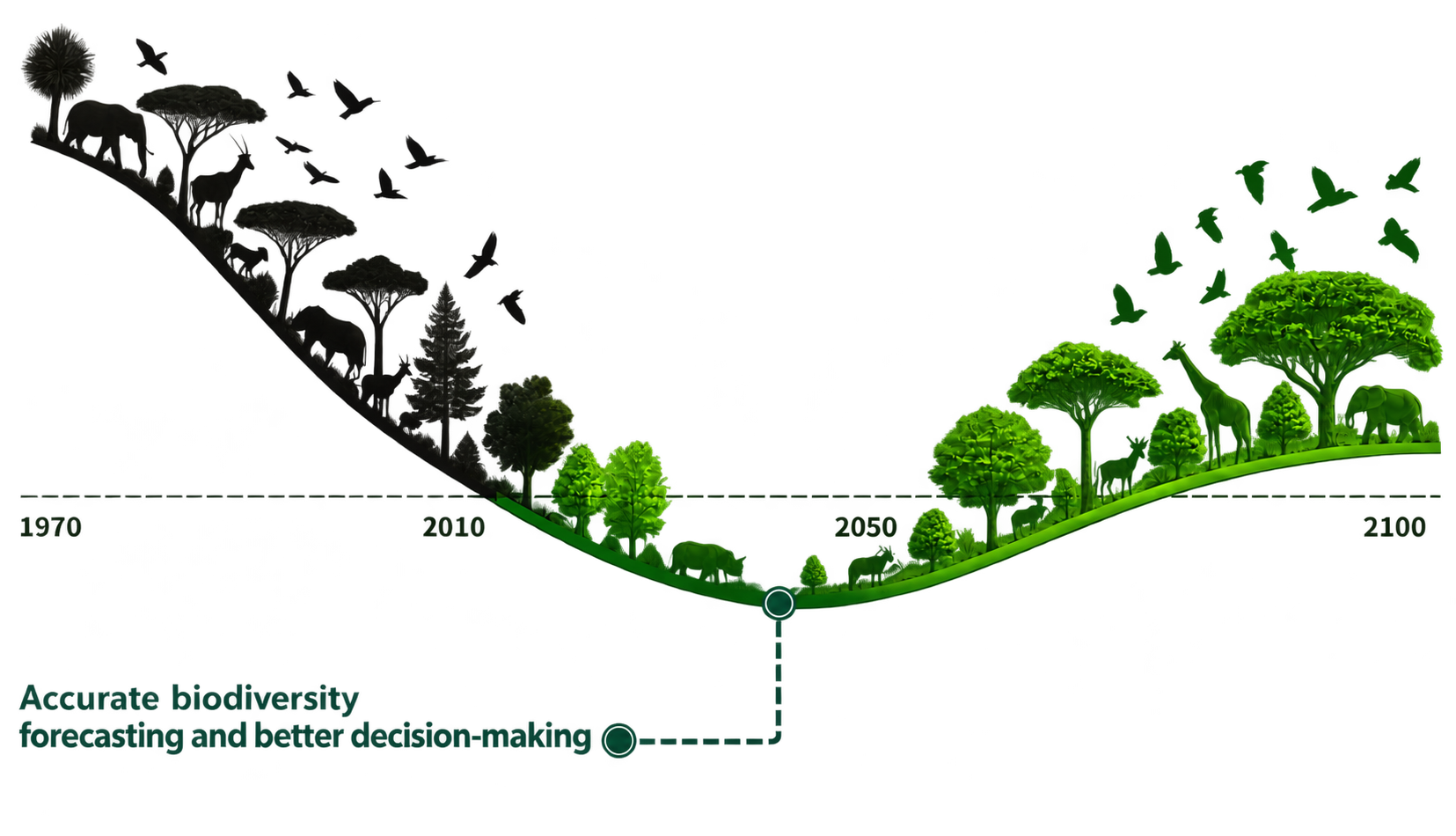
… and a better future for biodiversity and Nature’s Contributions to People